


For most beginner hunters, a good backpack is probably not the first piece of equipment that comes to mind when thinking about gearing up for the upcoming season. But as any seasoned hunter will tell you, your hunting day pack is actually one of the most important parts of your kit. Whether you’re using a compound bow or a long rifle, it’s important to remember that the hunt is only half of it.
The other half? Hiking out with as much meat as you can carry.
One thing is for sure:
You don’t want to wait until you are cleaning your kill to start thinking about how you are going to get it home. Packing out a mule deer can mean carrying around 100 pounds of meat and gear, so it’s not something you want to take lightly.
The best daypacks for hunting not only give you a way to get all that delicious meat back home and into your freezer, they also offer quiet fabric, smart weapon carry and easy-to-reach pockets that make the whole hunt more enjoyable. Below are the 6 best hunting day packs for 2026 – from a lightweight treestand pack and a whitetail day pack to a framed pack for elk hunting – followed by a detailed guide on how to choose the best day pack for hunting the way you do.
Comparison Table
| Best Feature | Accomodates | Pattern | Hydration Pocket Capacity | Total Volume | Pros | Cons |
|---|---|---|---|---|---|---|
|
Best Lightweight Daypack

Pursuit
ALPS OutdoorZ
|
Bow/Rifle/Shotgun | Realtree/Mossy Oak | 2-3L | 2700 CI |
|
|
|
Best Daypack for Elk Hunting

Badlands 2200
BADLANDS
|
Bow/Rifle/Pistol | Approach/FX/Earth | 2L | 2750 CI |
|
|
|
Best Budget Rifle Daypack
Terrain Twin Mesa
ALLEN COMPANY
|
Rifle/Bow | Mossy Oak | n/a | 1830 CI |
|
|
|
Best Multipurpose Hunting Backpack

Eberlestock X2
EBERLESTOCK
|
Shotgun/Bow/Pistol | Multicam/Mountain/Dry Earth | 2.5Lx2 | 2450 CI |
|
|
|
Best Whitetail Day Pack

Gear Fit Pursuit Bruiser
ALLEN COMPANY
|
Rifle/Compact Bow | Mossy Oak | Yes, n/a | 2350 CI |
|
|
|
Best Day Pack for Bow Hunting

Hunting Daypack
BLISSWILL
|
Bow/Rifle/Handgun | Multiple camo | n/a | 3087 CI |
|
|
ALPS OutdoorZ Pursuit Hunting Pack – Best Lightweight Daypack for Hunting

| ACCOMMODATES | Bow, Rifle, Shotgun |
|---|---|
| PATTERN(S) | Mossy Oak Country DNA, Realtree Edge, Realtree APX, Coyote Brown |
| WEIGHT | 4 LBS, 1–7 OZ (depends on pattern) |
| VOLUME | 44 Liters (2,700 cu. in.) |
| WATERPROOF? | No; Rain cover included |
| BEST FEATURE | Drop-down weapon pocket |
We can say this from the get go: you will have a hard time finding more features in a hunting backpack around the $100 mark than you get with the Pursuit by ALPS OutdoorZ. It isn’t the largest or toughest pack we looked at, but it has the best balance of cost, weight and functionality, and that makes it our pick for the best lightweight daypack for hunting.
The current Pursuit holds 44 liters (2,700 cubic inches), so there’s room for extra layers, lunch, calls and a rangefinder on an all-day sit. A drop-down pocket at the bottom of the pack holds your bow or rifle for hands-free walking and climbing into a treestand, and it also works for antlers. A large front pocket with mesh and zippered organizers keeps phones, keys, knives, snacks and first aid within reach, and a hunting partner can grab what they need without digging through the main compartment.
The pack is hydration compatible, has lower side mesh pockets and webbing loops for lashing, and comes with a rain cover that stows in a zippered pocket at the bottom. The padded waist belt fits a wide 33–63″ range.
What it isn’t designed for is packing out meat. There is no load-hauling frame or meat shelf, so if you expect to carry a quartered deer, look at the Badlands 2200 or Eberlestock X2 below. Big guys like me may also find the torso a bit short: I had to let the shoulder straps all the way out to get the hip belt to sit at the right place on my hips.
- Great price for 44 L and a rain cover
- Drop-down pocket carries bow or rifle hands-free
- Not designed to carry heavy loads like pack-out meat
- Not ideal for taller hunters with longer torsos
Badlands 2200 Hunting Pack & Meat Hauler – Best Day Pack for Elk Hunting

| ACCOMMODATES | Bow, Rifle, Pistol (hip-belt holster) |
|---|---|
| PATTERN(S) | Approach, Approach FX, Realtree, Solid colors |
| WEIGHT | 5 LBS, 10 OZ |
| VOLUME | 2,750 cu. in. (~45 L), Large frame |
| WATERPROOF? | Water resistant (KXO-50 fabric, DWR) |
| BEST FEATURE | Built-in meat shelf & magnesium frame |
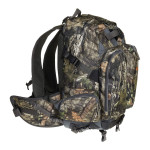
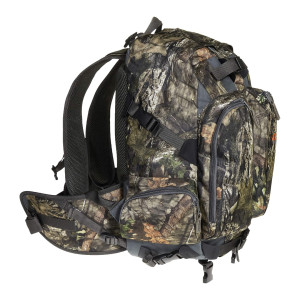
If you’re looking for the best day pack for elk hunting, you need something most daypacks don’t have: a real frame and a way to haul meat. The Badlands 2200 has been the company’s classic for more than 25 years, and it is still the pack we’d grab for an elk day hunt.
The current version uses an Allite magnesium frame and a molded foam suspension that carry weight remarkably well for a pack this size. A built-in blaze-orange meat shelf folds out between the frame and the bag, so you can strap a boned-out quarter or your elk’s backstraps to the pack without stuffing bloody meat inside. Badlands also offers the 2200 in two frame sizes – Medium for 17–19″ torsos and Large for 19–22″ – which solves the fit problems we had with older versions, especially for women and shorter hunters.
Here’s something we loved about the 2200 that you don’t see every day: a large, discreet back-panel access zipper. You can get into the main compartment from the back, so you don’t have to swing the pack around and make noise when an animal is close. Eight pockets, including hip-belt pouches, a hip-belt pistol holster and a dedicated spotting scope pocket, keep small gear organized, and a detachable boot carries your rifle or bow.
The downsides are weight and price. At 5 lbs 10 oz it’s the heaviest pack on our list, and at around $400 it’s also the most expensive. The main compartment also doesn’t have much internal organization – it’s built to carry layers and meat, not to sort small gear. For whitetail hunting from a stand it’s more pack than you need, but if you want the best elk hunting day pack that still feels like a daypack, it’s hard to beat.

- Built-in meat shelf and magnesium frame for heavy loads
- Two frame sizes, very comfortable molded suspension
- Most expensive pack on our list
- Heaviest pack here, little internal organization
Allen Terrain Twin Mesa Daypack – Best Budget Rifle Daypack
| ACCOMMODATES | Rifle, Bow |
|---|---|
| PATTERN(S) | Mossy Oak Break-Up Country |
| WEIGHT | Not listed by Allen |
| VOLUME | 30 Liters |
| WATERPROOF? | No |
| BEST FEATURE | Integrated rifle carry system |
The Twin Mesa used to carry the Remington name; that version has been discontinued, and the same design now lives on as the Allen Terrain Twin Mesa. Its main job hasn’t changed: giving you a secure, comfortable carry for your long rifle while you hike in and out.
The integrated firearm/bow carry system takes a bit of time to set up, and you’ll want to learn all the straps at home before the season. Once it’s dialed in, though, it gives a remarkably stable carry even for longer rifles. It’s not a “run-n-gun” system built for quick rifle access – it’s for the walk in and the walk out. If you are close on the trail of your prey, the rifle should be in your hands anyway.
Organization is pretty good for a 30-liter pack. You get five zippered compartments plus an interior mesh pocket, so calls, gloves, a beanie or a light rain jacket stay out of the main compartment. Padded shoulder straps, an adjustable sternum strap and a waist belt that adjusts up to 54″ keep it stable, and it’s hydration ready.
It certainly isn’t the most breathable pack on the market, and there’s no frame, so this is a pack for whitetail and small-game days, not for hauling meat. The price has also gone up since the Remington days – it’s now closer to $125 than $60 – so watch for sales.
- Secure long-rifle carry system for longer hikes
- Five zippered pockets, hydration ready
- Not very breathable back-panel fabric
- Carry system takes a while to figure out; no frame for meat
Eberlestock X2 Pack – Best Multipurpose Hunting Day Pack

| ACCOMMODATES | Pistol, Shotgun, Rifle, Bow |
|---|---|
| PATTERN(S) | Multicam, Mountain, Dry Earth, Loden, Military Green |
| WEIGHT | 5.5 LBS |
| VOLUME | 2,450 cu. in. (40 Liters) |
| WATERPROOF? | Water resistant; rain cover sold separately |
| BEST FEATURE | Frame, meat hauler & MOLLE webbing |
We have to admit that this pack blew our minds a little. It’s a bit large to technically be called a “daypack”, but it’s light enough to go head-to-head with any other pack on our list.
Why were we so taken aback?
Mostly because of how versatile it is. The redesigned X2 holds about 2,450 cubic inches (40 L), has an integrated aluminum frame, and offers more organization and better weight distribution than almost any other pack we looked at. It works for every kind of hunting you can think of – pistol, shotgun, rifle (with Eberlestock’s Bolt Action Scabbard), compound bow or crossbow. The frame even folds down to work as a seat, which makes the X2 a favorite with saddle hunters.
The biggest difference between the X2 and the lighter packs on our list is load-carrying ability. The frame and meat-hauling design mean it can carry a deer or a load of elk meat without putting undue stress on your back. MOLLE webbing on the outside and on the hip belt, plus oversized compression straps, let you lash on everything from a tripod to a sleeping bag. We think it can easily handle 2–3 day hunts, while staying light enough for a one-day outing.
In our earlier tests the old X2 was too short for tall hunters because the torso length isn’t adjustable. The V2 has been reworked to fit longer torsos, but it’s still a fixed-size pack, so check the fit if you are taller than about 6 feet.
- Lots of pockets, MOLLE webbing & storage options
- Frame hauls meat; works for any type of hunting
- Non-adjustable torso length
- Pricey (around $300) and heavy for a daypack
Allen Gear Fit Pursuit Bruiser Whitetail Daypack – Best Whitetail Day Pack
| ACCOMMODATES | Rifle, Compact Bow |
|---|---|
| PATTERN(S) | Mossy Oak Break-Up Country |
| WEIGHT | 4.6 LBS |
| VOLUME | 2,350 cu. in. (39 Liters) |
| WATERPROOF? | No; reversible rain fly included |
| BEST FEATURE | Fold-down treestand workstation |
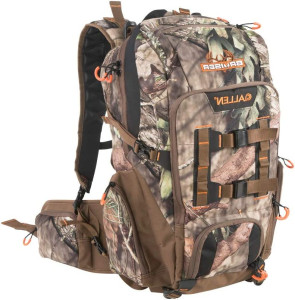
If you mostly hunt deer from a stand or a blind, the Allen Gear Fit Pursuit Bruiser is our pick for the best whitetail day pack. It’s the model we recommend from Allen’s “Deer Hunting Back Pack” line, and it was designed specifically for whitetail hunters.
The standout feature is the fold-down workstation. Once you’re settled in the stand, it stays open and hands-free, with two stretch-closure pouches for calls, a removable patch with elastic loops for scent or a rangefinder, and a zippered mesh pocket for keys and phone. There are even slots for rattling antlers. It’s the kind of organization that keeps you from rummaging – and making noise – when a buck is close.
Capacity is 2,350 cubic inches (about 39 L), with a wide-opening main compartment and a hydration sleeve. An adjustable gun or bow carry system tucks away into a pocket when you’re not using it, and a reversible blaze orange/brown rain fly hides in a pouch at the bottom. Molded, padded shoulder straps with air mesh and a padded waist belt with two large pockets make it comfortable for the walk in.
At around $120–140 it’s priced in the middle of our list, which is fair for what you get. The bow carry is meant for compact bows, though, and there’s no frame, so it’s not for hauling meat out of the backcountry. Allen’s warranty is one year, shorter than the lifetime warranties from ALPS, Badlands and Eberlestock.
- Fold-down workstation is perfect for treestands
- Tuck-away rifle/bow carry and rain fly included
- Quiet fabric, hydration compatible
- Bow carry fits compact bows only
- Only a 1-year warranty
BLISSWILL Hunting Daypack for Rifle, Bow, Gun – Best Day Pack for Bow Hunting
| ACCOMMODATES | Bow, Rifle, Handgun |
|---|---|
| PATTERN(S) | Several camo patterns (Reed, Timber and others) |
| WEIGHT | 3.1 LBS (1.4 kg) |
| VOLUME | Up to 50 Liters (3,087 cu. in., expandable) |
| WATERPROOF? | Water-resistant fabric |
| BEST FEATURE | Expandable bow/rifle pocket |
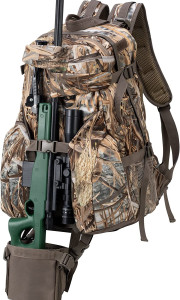
The BLISSWILL Hunting Daypack is a budget pack with several features that make it ideal for bow hunting. An expandable front pocket holds compound bows across a range of sizes (or a rifle), and when you aren’t carrying a weapon it becomes extra storage. The soundless fabric lets you get into your gear quietly on the move.
At about 3 pounds it’s the lightest pack on our list, yet it expands to roughly 50 liters, which is plenty for an all-day sit with extra layers. Padded, adjustable shoulder straps, a sternum strap and a waist belt keep the load stable, and a mesh back panel helps with ventilation.
BLISSWILL adds a couple of small safety extras: a compass and a lifeguard whistle built into the sternum strap, plus a removable blaze orange panel you can attach for visibility during rifle season.
The fabric is water-resistant, not waterproof, so in a real downpour you’ll still want a rain cover. We’d also like to see a few D-rings or MOLLE loops for clipping on extra gear, and long-term durability isn’t on the level of ALPS, Badlands or Eberlestock. For a bow hunter on a budget, though, it’s very hard to beat.
- Expandable pocket fits compound bows
- Lightest pack on our list at about 3 lbs
- Built-in compass and whistle
- No D-rings or MOLLE for extra gear
- Not as durable as premium brands
Conclusion
There’s nothing like field testing a new hunting daypack, and today’s packs are lighter, quieter and more comfortable than ever. The right one depends on how and where you hunt.
If you want an all-around great value and the best lightweight daypack for hunting, take a serious look at the ALPS OutdoorZ Pursuit. It’s affordable, it holds 44 liters, and the drop-down pocket keeps your bow or rifle secure on the way to the stand. Whitetail hunters who spend long hours in a treestand will love the fold-down workstation on the Allen Gear Fit Pursuit Bruiser.
If you hunt elk or mule deer in big country, get a pack with a frame. The Badlands 2200 is our pick for the best daypack for elk hunting thanks to its built-in meat shelf, while the Eberlestock X2 is the most versatile option if you also hunt from a saddle or want MOLLE-based customization.
Deep Dive: How to Choose the Best Daypack for Hunting
When it comes to daypack hunting gear, you can’t take just any old backpack if you want a hunting trip that is as comfortable as it is successful. A hunting day pack needs quiet fabric, a way to carry your weapon and, for bigger game, a frame that can handle meat.
Here is what to look for in a hunting pack. Depending on the environment, the game you hunt and your weapon, you’ll have to prioritize some features over others.
- Fabric
Brushed tricot, fleece-like polyester and microsuede are the quietest fabrics – important when you move or open a pocket near game. Ripstop nylon and coated fabrics are tougher and shed water better but can be noisier.
- Zippers
Non-essential at first, but really important when you are out in the field, wearing gloves or working in low light. Look for quiet zippers with large pulls.
- Compartments and pockets
The way your backpack is organized directly affects how you pack it and how quickly you can find things on stand.
- Cargo volume
More isn’t always better: a bigger pack is heavier and catches more brush. For whitetail hunting from a stand, 1,500–2,500 cubic inches (25–40 L) is usually enough. For elk and other western day hunts where you may pack out meat, look at 2,500–3,000+ cubic inches (40–50 L) with a frame or meat shelf.
- Size & Weight
A frameless daypack can weigh 3 pounds or less, while framed meat-hauling packs weigh 5–6 pounds. Choose based on how far you walk and whether you plan to carry meat.
- Straps & Fit
A good pack stays close to your body and doesn’t shift when you move. If the pack has fixed torso lengths, check the sizing before you buy.
- Price
Budget packs under $100 are fine for treestand and short whitetail hunts. For heavy loads and years of hard use, it’s worth paying for a framed pack with a lifetime warranty.
Pockets, Storage, & Organization
One thing you will see in common between most hunting packs is a plethora of pockets and storage compartments. These allow for the highly specialized organization a good hunter requires.
External Pockets are ideal for things that might need to be accessed in a hurry. These items might include:
- Rangefinder
- First Aid
- Rain Gear
- Game calls
Internal Pockets are usually larger and less compartmentalized, because they carry items you don’t need in a hurry, such as:
- Additional Layers
- Lunch and extra water
- Game bags
A Hydration Sleeve is also available on most good hunting packs. It holds a 1–3 liter reservoir, like a Camelbak, with a port for the drinking tube. Look for one that lets you remove and refill the reservoir without unpacking the rest of your gear.
Gun & Bow Holders AKA Boot Holders
Any hunting pack worth its salt is going to have some method of carrying your firearm or bow. Most use a boot or drop-down pocket at the bottom of the pack, combined with straps higher up. Packs designed for rifle hunting often feature a sling or scabbard into which the rifle’s butt rests while the barrel points upward. This is one of the safest ways to carry an exposed rifle.
Pistol Holsters are often available on hunting packs near the hip belt, providing quick access for handgun hunters.
Bows and Crossbows are easily attached to most hunting packs with the straps sewn onto the outside. Check the size of the bow pocket before you buy – some only fit compact bows.
Frame & Meat Shelf
If you hunt elk, mule deer or anything big enough that you’ll be packing meat, look for a pack with an internal frame and a meat shelf. A meat shelf is a separate load space between the pack bag and the frame, so you can carry a quarter or boned-out meat against the frame and keep it away from your gear. Frameless daypacks are lighter and quieter but aren’t meant for loads over about 30 pounds.
Waist Belt / Hip Straps
The more weight you plan on carrying, the more you are going to want a good waist belt. Waist belts take a considerable amount of stress off your back and shoulders, giving you a more comfortable carry, especially when your pack is full of elk meat.
Removable hip belts are becoming more common on hunting backpacks, because you can take them off for run-and-gun hunting when they get in the way, then put them back on when it’s time to pack out.
Rain Cover
Because there are almost no completely waterproof hunting packs out there, make sure you have a good rain cover. Many hunting packs include one in a bottom pocket, often blaze orange on one side for visibility. Covers are cheap, light and packable, and they go on in seconds.
You can also restore a rain cover’s water repellency by washing it with a wash-in waterproofing treatment.

Bonus Guide: What Gear to Bring on a Hunting Trip
Although the specific contents of your hunting pack will vary depending on a whole host of factors, there is a widely agreed-upon list of items that you should have with you every time to make sure you have the safest, most comfortable and most successful hunt possible. These items include (but are not limited to):
- Water (& water purification system)
- Blaze orange vest or treestand safety harness
- Headlamp or Flashlight
- First aid kit
- Knife
- Rain Gear (& Waterproof Pack Cover)
- Rubber Gloves (for field dressing)
- Survival blanket
- Game bags (or heavy-duty trash bags)
- Rangefinder
- Fire Starter
- Game Call
Safety Tip: remember, anything can happen out in the wilderness. Even if you are only planning on being out for a single day, keep all the essential safety equipment in your pack in case you have to spend more time outside than you planned. A first aid kit, emergency blanket and a way to purify water are essential in any hunting daypack.
Frequently Asked Questions
For most hunters, the ALPS OutdoorZ Pursuit is the best day pack for hunting: it holds 44 liters, carries a bow or rifle hands-free, includes a rain cover and costs around $100. If you hunt whitetails from a treestand, the Allen Gear Fit Pursuit Bruiser's fold-down workstation is hard to beat, and for elk hunting you'll want a framed pack like the Badlands 2200.
The best elk hunting day pack has a frame and a meat shelf, because you may need to carry a quarter or boned-out meat. Our pick is the Badlands 2200, with a magnesium frame, a built-in meat shelf and 2,750 cubic inches of space. The Eberlestock X2 is a more versatile alternative with a load-bearing frame and MOLLE webbing.
For whitetail hunting from a stand or a blind, 1,500–2,500 cubic inches (25–40 liters) is usually enough for layers, calls, water and snacks. For elk and other western hunts, look at 2,500–3,000+ cubic inches (40–50 liters) with a frame, or a larger frame pack if you'll be packing out a whole animal.
Your pack's contents depend on how long you'll be out and how you hunt, but the basics are water, a headlamp, a first aid kit, a knife, rain gear, field dressing gloves, game bags, a rangefinder, a fire starter and a game call. See the "What Gear to Bring on a Hunting Trip" section above for the full list.
Put the things you need quickly – rangefinder, calls, knife, GPS – in outside or hip-belt pockets you can reach without taking the pack off. Heavier items like water and extra layers go in the main compartment close to your back. Digging through a pack makes noise, so organize it so you don't have to rummage when game is close. If your pack has a rifle or bow carry system, practice using it at home before the season.
A few exist, but they're rare. Fully waterproof fabrics tend to be noisy and are hard to sew pockets and straps into without leaking. Most hunters use a water-resistant pack plus a rain cover. Many hunting packs, including the ALPS Pursuit and Allen Bruiser, come with one stored in a bottom pocket.
Yes. The many pockets and organization make hunting packs great for road trips and travel. Just keep in mind that camo doesn't blend in at airports. A solid-color version (most brands offer one) draws less attention.
Regulated, licensed hunting is a major source of funding for wildlife conservation in the US. Hunting license fees and federal excise taxes on firearms, ammunition and archery equipment (through the Pittman-Robertson Act) pay for a large share of state wildlife agencies' habitat and species programs. Hunting seasons and bag limits also help wildlife managers keep populations like deer in balance with their habitat.


How big of a hunting backpack do you need if you are going to be out for more than just one day? Can any of the backpacks on this list be used for a longer hunting trip?
If you are planning on being out there for a couple of days, there is no reason that one of the packs on our list would not be able to suit your purposes. Hunting is all about traveling light, after all, so with some careful planning and packing it should be no problem to fit everything into a single backpack.
This is made all the easier by properly setting up your home base camping site. Here you can keep all your backup supplies, layers, tools, and beverages, without having to haul them with you as you track your target through the leg-burning mountains. This means that you actual backpack will be fairly restrained in terms of what it is carrying. Medical supplies, ammunition, and a rifle or bow holder are all must-haves. On top of that you are going to need to fit a water bladder, survival blanket, flashlight, and of course enough nutrition to keep you going as long as you need to.
Our team’s opinion is that the EBERLESTOCK X2 would be the most appropriate for an extended jaunt through the woods … it is one of the largest packs on the list and has a lot of different pockets for high-level organization and quick access.
I’m a really big fan of the Tenzig pack. The craftsmanship simply can’t be beat from what I have seen in previous backpacks, and now I think I have finally found the one that I’ll be using for many seasons to come. It’s durability is apparent from the moment you take it out of the box, but you aren’t really going to appreciate it until you put it on and realize how comfortable it is, even when totally loaded up.
The bow and rifle holder is maybe the best part. It’s a far simpler operation than what I have seen on even the more advanced (expensive) hunting packs. The fact that you can basically click in and click out of it at the drop of a hat means that it is great for run-n-gun style pursuits, which I always find myself getting into every now and then.
The big question for me what how big of a water bladder this thing could support. There is a sewn-in compartment along the back panel that I assume is for an H20 bladder, but it looks like it maxes out at about 2 Liters in size before it starts to stress the pocket out a bit. Otherwise, my 3 Liter bladder fits fine in the main compartment.
Not a ton of pockets like some of the other models on your list … but overall I’m pretty pleased with it.
I’m new to hunting so sorry if this is a dumb question, but are these backpacks meant for carrying camping gear? Or are you supposed to actually dead animals in them?
First things first, welcome to the sport of hunting! Even experienced hunters are always finding new things to learn about their favorite pastime, so you should never feel bad asking questions.
The answer to your question is that all the backpacks on our list are a bit different, but there isn’t a single one of them that can’t be used for a number of different purposes. Some hunters aren’t going to be far enough out to have to worry about field-dressing an animal, so they don’t have to be concerned with the question of how they are going to pack the meat out of there.
However most of these packs could be used quite effectively for the transportation of cleaned meat, animal sections, or even trophy-size heads and antlers. Similarly, the smaller packs can function just as well at keeping your survival and hunting hear organized and easily accessible at all times, even if you aren’t going to have to be doing a whole lot of carrying.
I take most of these things but also take a compass, extra batteries (for flashlight and gps) and I print out a copy of a map of the area I am hunting if I am able to.
I also take extra ammo for my concealed carry and if it is rifle season then extra for my hunting rifle. Before I got my concealed permit that allows me to carry a pistol while archery hunting- I kept a small whistle in my pack. If you were in an emergency and cellphones not an option – you need something to signal for distress that takes little energy/effort that can be heard long distances.
Extra hats and extra safety orange are also in my pack. They are all light weight but have come in handy for me in the past- I haven’t had to struggle to take my orange off to throw on rain gear – just put the rain gear on then the extra orange vest!
One thing too I started when I was big into hiking (especially going off trails) at local state parks that I now do when hunting is an index card on my dash for incase of emergencies. I always put my name, cellphone number, emergency contact, and a generalized area where I plan on starting my hunt along with the date and time of departure and date/tine that I planned on returning. It’s best if your emergency contact is someone who has been out in the woods with you before- they will be able to give a bit of insight to how you think and react if something goes wrong. The date and times are important because then game wardens and law enforcement know how long you have been out and have truly been “missing”. Called me paranoid but I always try to plan for worse case scenarios. I have never gotten “lost” in the woods, but worry about being out alone and getting injured. There are always uncontrollable unforeseen circumstances- tree branches falling a day after a bad storm, slip and fall and hit your head, even severely sprained ankles. I have talked to a lot of game wardens that work out at our state parks and they have commented on my ICE cards and have started using the idea themselves when off-duty. They have had to do minor search and rescues and said it would have saved them a lot of time and energy to have a starting point since there are a lot of different trailheads to choose from at each parking spot.